

If you’re thinking about getting into proprietary trading, it’s important to understand how the white label prop firm model works. This setup allows you to use existing technology and support systems, making it easier to start trading. By partnering with a white label provider, you can focus on developing your trading strategies and building client relationships, while they manage compliance and risk.
Understanding White Label Prop Firms in Trading

Entering the proprietary trading sector requires a solid grasp of white label prop firms. These firms offer a streamlined way to launch your trading business without needing to develop complex technology. If you’re wondering about the bigger picture, read our guide on how to start a prop firm from scratch.
By utilizing existing technology and sophisticated trading tools, you can concentrate on analyzing markets and fostering client relationships instead of dealing with technical operations. Risk management becomes less burdensome as the compliance processes are handled by the white label provider.
This approach allows for quicker entry into the market with lower startup costs, enabling you to establish your brand while benefiting from reliable operational support.
Benefits of White Label Solutions in Proprietary Trading
Using a white label solution in proprietary trading can significantly improve your business operations. One of the primary advantages is cost efficiency. By using existing technology and infrastructure, you can enter the market with a lower initial investment.
Additionally, this model helps manage regulatory compliance. White label providers typically take care of legal requirements, which reduces the burden on your team. Understanding how prop firms make money will help you build a profitable business model from day one.
You also gain operational flexibility. These solutions can be tailored to fit your specific needs, which means you can adapt them as your business evolves.
Steps to Launch Your Own Prop Firm
Launching a proprietary trading firm requires careful planning and execution. Start by setting up the necessary trading infrastructure through a white label solution.
Next, prioritize regulatory compliance. Adhering to rules and regulations is vital for building trust with your traders.
When it comes to trader onboarding, create user-friendly portals. You’ll want to design evaluation programs — learn about prop firm challenges to understand what traders expect from these evaluations.
Integrating various payment solutions is another important step. This approach helps optimize revenue streams and ensures smooth transactions for your traders.
To attract traders, develop targeted marketing strategies. Many traders search for no evaluation prop firms or funded trader programs, so positioning your firm to serve these audiences is key.
Lastly, implement systems for performance tracking. Understanding metrics like profit factor and drawdown management will help you assess trader performance effectively.
Choosing the Right White Label Provider
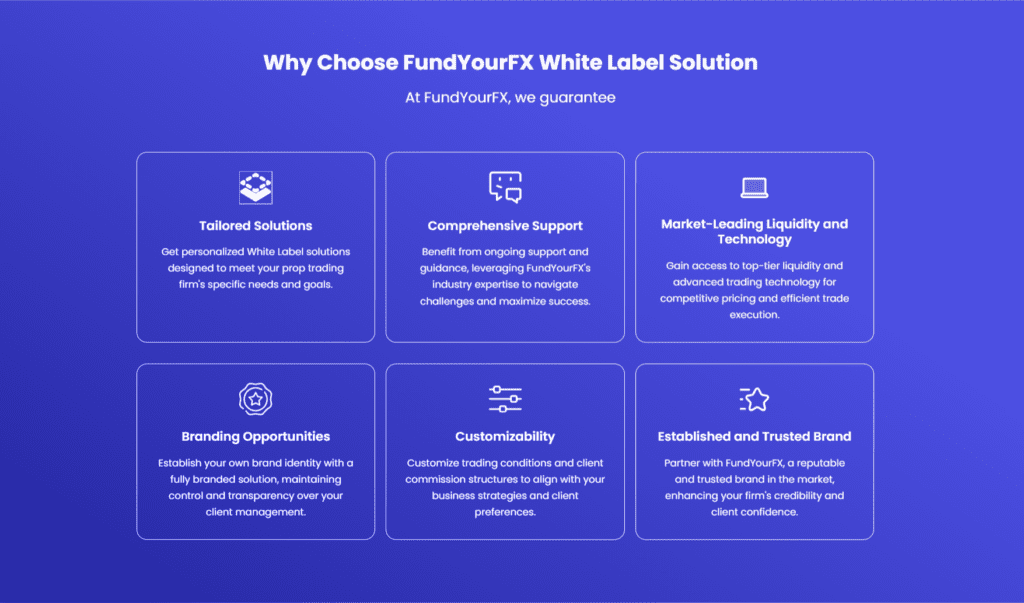
Choosing the right white label provider is vital for the success of your proprietary trading firm. Begin by evaluating potential providers, focusing on platform customization options that align with your specific trading requirements.
Quality of support is another essential factor; dependable customer service and training resources are critical. An effective white label provider should also offer operational support, such as assistance with strategy development and risk management, to improve your trading effectiveness.
Future Trends in the Prop Trading Industry
As the prop trading industry changes, several important trends are emerging. Innovations such as artificial intelligence and machine learning are improving risk assessment and trading strategies. Some firms are already exploring automated forex trading systems to enhance performance.
Regulatory changes are prompting firms to quickly adapt to new compliance requirements. The growth of social trading and community engagement tools is fostering collaborative environments, making firms more appealing to potential talent.
Furthermore, there’s an increasing emphasis on sustainability, encouraging traders to adopt ethical practices and focus on socially responsible investment strategies. Understanding how proprietary trading compares to hedge funds can help you position your firm strategically in this evolving landscape.
Kesimpulan
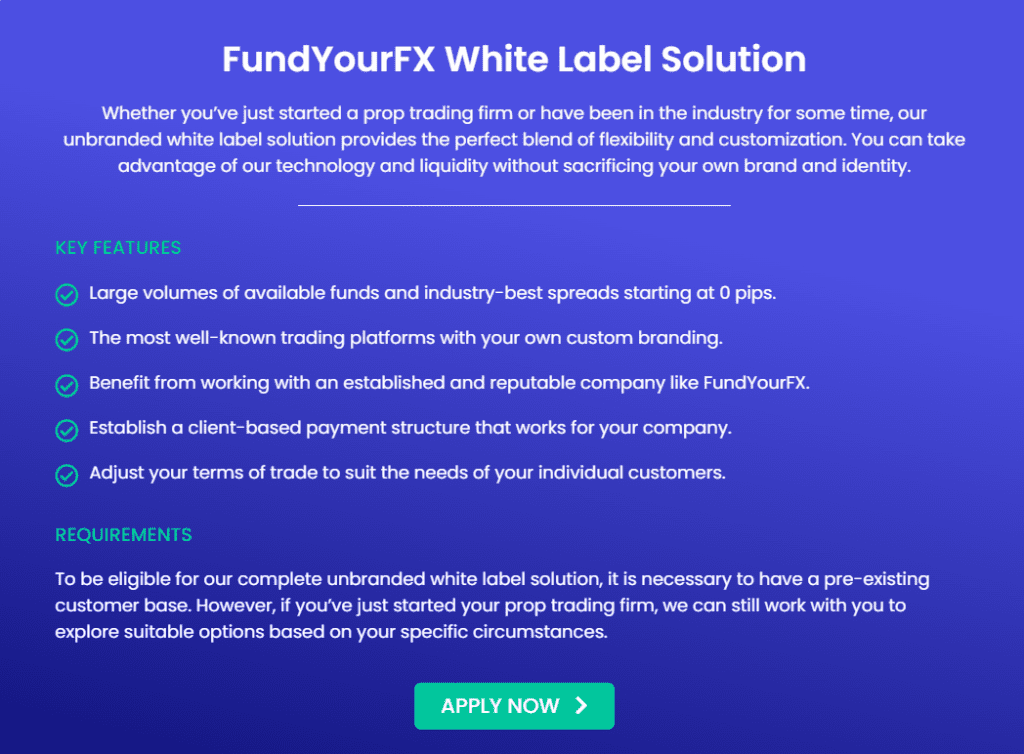
Partnering with a white label prop firm can simplify your entry into the trading sector. These firms provide essential technology and operational support, allowing you to concentrate on analyzing the market and cultivating client relationships while keeping startup expenses low. Choosing the right white label provider is vital for ensuring compliance and managing risks as you consider launching your own prop firm.
Related Prop Firm Guides
- What Is a Prop Firm? The Complete Guide to Proprietary Trading
- How to Start a Prop Firm: Costs, Licensing, and Business Guide
- How Do Prop Firms Make Money? The Business Model Explained
- Cara Menjadi Trader yang Mendapat Pendanaan
- How to Pass a Prop Firm Challenge
- Proprietary Trading vs Hedge Funds: Key Differences